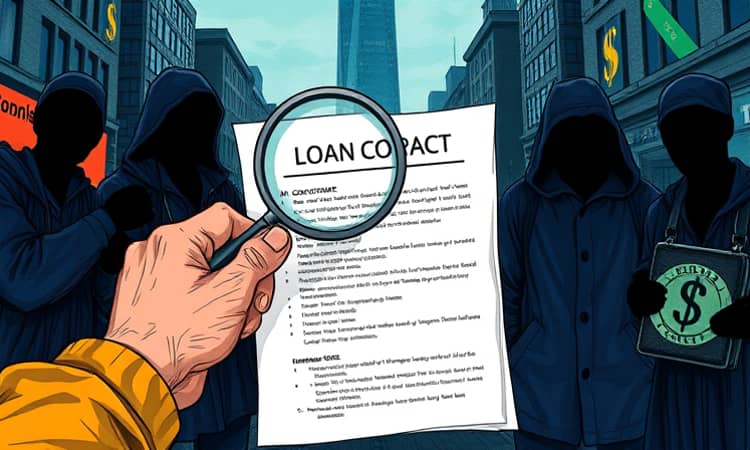
Financial stress can push even the most cautious individuals towards seemingly quick solutions.
These solutions, however, often mask dark and deceptive practices that strip away hard-earned wealth.
This article is your guide to navigating these treacherous waters and emerging unscathed.
By learning to identify predatory lending, you empower yourself to make informed decisions.
You can protect your assets and secure a brighter financial future.
What Is Predatory Lending?
Predatory lending involves loan terms that are fundamentally unfair and abusive.
It uses deception or manipulation to push loans onto borrowers who cannot afford them.
The primary benefits always flow to the lender, not the borrower.
This practice thrives on exploiting financial desperation and lack of awareness.
It can lead to severe and lasting consequences for those caught in its web.
Common Types of Predatory Loans
Recognizing the various forms of predatory loans is crucial for protection.
Here are some of the most prevalent types you might encounter.
- Payday loans: These are short-term loans with triple-digit APRs designed to trap borrowers in endless debt cycles.
- Car-title loans: Borrowers use their vehicle title as collateral, risking loss of their car if they cannot repay within 30 days, often with fees up to 25% of the loan amount.
- Subprime mortgages: High-interest loans offered to individuals with poor credit, frequently including balloon payments that can lead to foreclosure.
- Installment loans: Longer-term loans that may have APRs exceeding 300% in some states, such as under Mississippi's Credit Availability Act.
- Rent-a-bank schemes: Non-bank lenders partner with out-of-state banks to evade state usury caps, charging APRs over 100%.
Each of these loans exploits vulnerabilities in financial systems to maximize lender profits.
Key Warning Signs to Spot
Staying vigilant for red flags can help you avoid falling victim.
Look out for these common indicators of predatory practices.
- Ultra-high interest rates or APRs, such as triple-digit percentages legal in 30 states.
- Excessive or up-front fees that drain your wealth before you even start repaying.
- Aggressive sales tactics including guarantees like "yes to anybody" or "no payments for months."
- Loans offered without verifying your ability to repay, targeting those living paycheck-to-paycheck.
- Balloon payments that hide the true cost and force refinancing with new fees.
- Interest-only loans where payments do not reduce the principal, eroding equity over time.
- Loan flipping or churning, where lenders encourage repeated refinancing at higher rates.
- Prepayment penalties for paying off the loan early, often exceeding reasonable limits.
- Over-valued appraisals or steering to subprime loans despite qualifying for better rates.
- Hidden fees or penalties not disclosed upfront, such as broker incentives for high-rate loans.
These signs point to intentional and harmful exploitation of borrowers.
The Statistics: Understanding the Scale
The impact of predatory lending is staggering and widespread.
In 2022 alone, 20 million predatory loans generated $8.6 billion in total, with fees amounting to $2.4 billion.
This represents a rebound from 2021, driven by increasing financial strain.
Certain states bear the brunt of this crisis, as shown in the table below.
This data underscores the urgent need for awareness and regulatory action.
Growth rates in states like California and Texas exceed national averages, indicating escalating risks.
The shift to online lending has made these practices more accessible and harder to track.
Demographic targeting exacerbates existing inequalities, with Black consumers twice as likely to be near payday loan shops.
These trends highlight a systemic and pervasive problem in the financial landscape.
Who Is Targeted by Predatory Lenders?
Predatory lenders often focus on specific vulnerable groups.
Understanding who is at risk can help in prevention and advocacy.
- Low-income individuals and families living paycheck-to-paycheck, who comprise 53% of Americans.
- Minorities, particularly Black and Hispanic communities, facing racial disparities in lending.
- The elderly and those on fixed incomes, who may have limited financial options.
- People with poor credit or unbanked status, numbering around 56 million in the U.S.
- Homeowners with equity but credit issues, often targeted for subprime mortgages.
- Military affiliates and working households in communities of color.
- Those facing unexpected expenses, such as home repairs or medical bills.
These groups are disproportionately affected by debt traps and asset loss.
Loopholes and Regulatory Gaps
Despite efforts to curb predatory lending, significant loopholes persist.
These allow lenders to continue exploiting borrowers under the guise of legality.
- Rent-a-bank schemes bypass state usury caps by partnering with national banks, enabled by COVID-era regulatory rollbacks.
- State variations in APR caps: 20 states and D.C. cap rates at 36% or lower, while 30 states allow triple-digit APRs.
- Examples like Mississippi's installment loan APRs over 300%, set to sunset in 2026, show temporary fixes.
- Policy calls for enacting stronger usury laws and enforcing caps to combat what are essentially modern loan sharks.
- Historical context ties this to past crises, such as the subprime mortgage meltdown.
Navigating these gaps requires vigilance and proactive measures from consumers and policymakers alike.
Practical Steps to Avoid Predatory Loans
Empower yourself with actionable strategies to steer clear of harmful loans.
Here are steps you can take to protect your financial health.
- Always check the full cost of a loan, including all fees and the APR, not just the monthly payment.
- Avoid lenders who make guarantees like "no credit check" or "instant approval," as these are often red flags.
- Compare loan offers from multiple sources, including credit unions or community banks with better terms.
- Seek financial counseling or education to improve your credit and explore alternatives to high-cost loans.
- Report suspected predatory practices to consumer protection agencies to help others and push for change.
- Build an emergency fund to reduce reliance on loans for non-routine expenses.
- Stay informed about state regulations and advocacy efforts to close loopholes.
By taking these steps, you can break the cycle of exploitation and build a secure future.
Remember, knowledge is your best defense against financial predators.
Share this information with loved ones to create a community of protection.
Together, we can demand better practices and support policies that prioritize borrower well-being.
Your financial journey should be one of growth, not grief.
References
- https://www.mecep.org/blog/predatory-lending-an-explainer/
- https://www.washingtoninformer.com/cash-strapped-borrowers-predatory-loans/
- https://www.responsiblelending.org/media/new-report-predatory-payday-lenders-took-24-billion-fees-borrowers-year
- https://www.tecom.marines.mil/In-the-News/Stories/News-Article-Display/Article/527983/beware-of-predatory-lending-practices/
- https://www.bankrate.com/loans/student-loans/predatory-lending-statistics/
- https://www.nclc.org/resources/predatory-installment-lending-in-the-states-2025/
- https://www.consumeradvocates.org/for-consumers/predatory-lending/
- https://home.treasury.gov/news/press-releases/report3076
- https://www.justice.gov/usao-edpa/divisions/civil-division/predatory-lending
- https://ohiocreditunions.org/predatory-lending-in-the-digital-world-using-data-to-help-members/
- https://www.nj.gov/dobi/division_consumers/finance/predatory.html
- https://predatorylending.duke.edu/data-analysis/