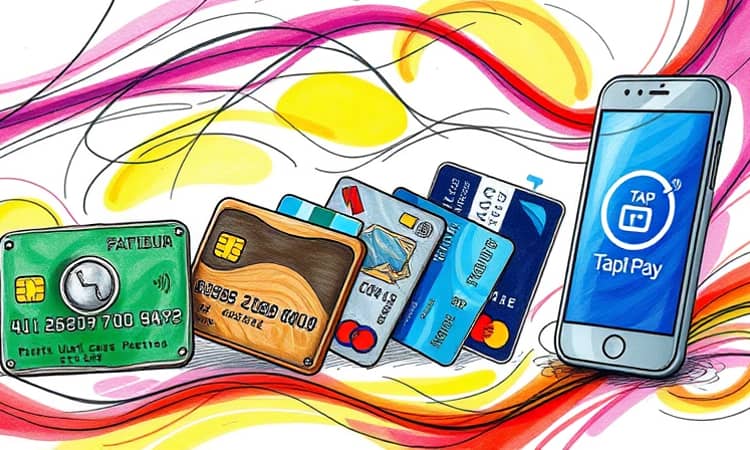
Imagine a world where every purchase required cash or cumbersome checks, where the convenience of instant credit was a distant dream. The transformative journey from analog to digital credit cards has reshaped global commerce, empowering consumers and businesses alike.
From humble beginnings in ancient credit systems to today's tap-and-go payments, this evolution reflects human ingenuity and technological progress. The seamless integration of plastic cards into daily life has made transactions faster, safer, and more accessible than ever before.
As we delve into this history, we uncover stories of innovation, regulatory milestones, and cultural shifts that defined eras. The rise of multipurpose charge cards in the mid-20th century marked a pivotal turning point, paving the way for modern finance.
The Dawn of Credit: Early Forms and Precursors
Long before plastic dominated wallets, credit systems existed in various forms.
In the 18th and 19th centuries, merchants used metal or celluloid tokens to track customer accounts.
These early tools, like charge coins, were rudimentary but effective for local economies.
Metal plates known as Charga-Plates became popular in the early 1900s.
They were kept in stores for manual record-keeping, limiting their use to specific locations.
- Early credit forms included barter systems and promissory notes.
- Charge coins from 1865 featured retailer information and account numbers.
- Shopper's plates in the 1930s were used by department stores and gas stations.
This analog era relied heavily on trust and manual processes.
The Birth of Modern Credit Cards
The 1950s witnessed a breakthrough with the introduction of the Diners Club card.
First modern multipurpose charge card allowed users to dine at multiple restaurants.
It expanded internationally by 1953, setting a precedent for global networks.
American Express followed in 1958 with a purple cardboard card, later switching to green plastic.
Bank of America's Fresno Drop in 1958 mailed 60,000 unsolicited BankAmericards.
This bold move introduced revolving credit with a 25-day grace period.
- Key players: Diners Club (1950), American Express (1958), BankAmericard (1958).
- Early challenges included fraud from unsolicited mailings.
- By 1960, nearly 1 million BankAmericards were in circulation.
These innovations laid the foundation for widespread adoption.
Technological Leaps: From Plastic to Electronic Systems
The shift to plastic cards in the late 1950s enhanced durability and standardization.
In 1969, IBM engineer Forrest Parry invented the magnetic stripe.
Magstripes stored data electronically, enabling faster transaction processing.
His wife's iron was famously used to fuse the stripe to plastic for CIA prototypes.
By 1971, partnerships with banks and airlines established a global standard.
The first electronic authorization system debuted in 1973, reducing phone verification times.
- Technological milestones: Magnetic stripe (1969), electronic terminals (1979), EMV chips (1990s).
- Visa launched bulky POS terminals in 1979, replacing manual imprinters.
- Verifone's ZON Jr XL in 1984 set benchmarks for portable payment devices.
These advancements streamlined commerce and improved user experience.
Security and Regulation: Protecting Consumers
As credit cards proliferated, issues like fraud and privacy emerged.
Unsolicited cards were banned in 1970 after over 100 million mailings caused chaos.
Regulatory acts were introduced to ensure transparency and fairness.
The Truth in Lending Act of 1968 mandated clear disclosure of terms.
Later, the Fair Credit Billing Act and Equal Credit Opportunity Act of 1974 provided protections.
- Key regulations: TILA (1968), FCBA (1974), ECOA (1974), CARD Act (2009).
- Security measures evolved from signatures to EMV chips with dynamic codes.
- Payment Card Industry Data Security Standard (PCI DSS) was established in 2004.
These steps built trust and encouraged safer transactions.
The Digital Era: Chips, Contactless, and Mobile Payments
The late 20th century saw the rise of EMV chip cards in Europe.
Dynamic transaction codes reduced fraud significantly compared to magstripes.
A liability shift in the U.S. in 2015 accelerated adoption.
Contactless payments, introduced in 2007, gained momentum with tap-to-pay technology.
The COVID-19 pandemic spurred a surge in contactless use from 2019 to 2025.
- Modern payment methods: EMV chips, contactless cards, mobile wallets like Apple Pay (2014).
- Benefits include faster checkout and enhanced security through tokenization.
- Biometric cards with fingerprints are emerging, powered by terminals without batteries.
These innovations make payments more convenient and secure.
Looking Ahead: The Future of Digital Payments
The journey continues with trends like biometrics and integrated digital ecosystems.
Wireless terminals for mobile merchants enable food trucks and markets to accept payments easily.
Global processing now handles trillions of dollars annually.
Future advancements may include AI-driven fraud detection and seamless cross-border transactions.
- Emerging trends: Expanded biometric use, integration with IoT devices, enhanced data analytics.
- Consumer expectations are shifting towards instant, invisible payments.
- Sustainability efforts may lead to eco-friendly card materials.
This evolution inspires us to embrace change and innovate for a better financial world.
Reflecting on this timeline, we see how each innovation built upon the last.
The global network of Visa and Mastercard enabled trillions in annual transactions.
From analog receipts to digital taps, credit cards have become integral to modern life.
This history teaches us to adapt and leverage technology for progress.
As we move forward, let's continue to innovate responsibly and inclusively.
References
- https://thepointsguy.com/credit-cards/history-of-credit-cards/
- https://www.worldpay.com/en-GB/insights/articles/the-evolution-of-credit-cards
- https://paycompass.com/blog/credit-card-history/
- https://www.thalesgroup.com/en/news-centre/insights/enterprise/financial-services/tracing-evolution-payment-cards-how-they
- https://www.experian.com/blogs/ask-experian/the-history-of-credit-cards/
- https://www.mobiletransaction.org/history-of-credit-card-machines/
- https://www.swipesum.com/insights/history-of-the-credit-card
- https://www.paragonedge.com/blog/a-look-at-the-history-of-credit-cards-and-the-evolution-of-payments
- https://www.au.bank.in/blogs/history-and-invention-of-credit-cards
- https://en.wikipedia.org/wiki/Credit_card